Victoria
After my sister, brother-in-law, and niece flew back to the United States, my mom and I caught a short 1-hour and 35-minute flight to Melbourne. From there, we picked up a rental car and headed southeast. Within an hour, the city thinned into open farmland—rolling green paddocks, scattered eucalyptus, and long straight roads cutting through grazing country. As we crossed the bridge onto Phillip Island, the air shifted noticeably: cooler, saltier, and carrying the steady presence of the ocean.
Phillip Island
We arrived early and checked into our Airbnb called the Rippon in Rhyll which was a wonderful little place with large glass sliding doors and a patio overlooking a grassy field with the occasional Cape Barron Goose. We unloaded our luggage and relaxed for a bit before taking the short 20 minute drive to the south west corner of Phillip Island to witness the Penguin Parade.
By late afternoon, the landscape had softened into dunes and low coastal scrub—banksias, grasses, and wind-shaped shrubs clinging to sandy soil. The beach itself faced Bass Strait, where the wind never seems to fully settle.
As the sun dropped toward the horizon, the crowd grew silent. The ocean turned steel-blue, then gold, then deepening shades of violet. For a long time there was nothing, just waves breaking in steady rhythm and the faint cry of seabirds overhead.
Then the first movement appeared at the edge of the surf.
Tiny silhouettes gathered hesitantly at the waterline, as if negotiating with the darkness. One group, then another. Suddenly the hesitation broke, and the penguins surged forward.
They moved in uneven clusters across the sand—small, blue-grey bodies waddling with surprising urgency. Every few metres they paused, scanned the dunes, and then pressed onward toward burrows hidden in the coastal grass. The effect was both chaotic and deliberate, like a tide of life returning inland.
We opted for the Underground Viewing which is quite expensive but puts you on ground level with the little penguins as they waddle up from the beach to their nests among the grass. It is quite intimate as you are eye level and only mere feet or even inches from the cute little creatures. However, from this vantage, you cannot see the beach, only the trail the penguins take once they are already ashore so you are slightly removed from the full drama of the moment and the emergence from the sea itself.
On a previous visit, I chose the general viewing platform, which is much less expensive and where you can watch the penguins appear from the ocean and follow their entire journey across beach and into the dunes. I would likely recommend that option as the best overall value and experience.
Once the penguins reach the shore they waddle all over the place and you can easily see them from the boardwalks as they waddle through the grass. Unfortunately, camera lights disrupt the penguins so they do not allow photography. However, the experience is definitely worthwhile and the memory of that dusk-lit shoreline, filled with small determined figures crossing the sand, stays sharper than any image.
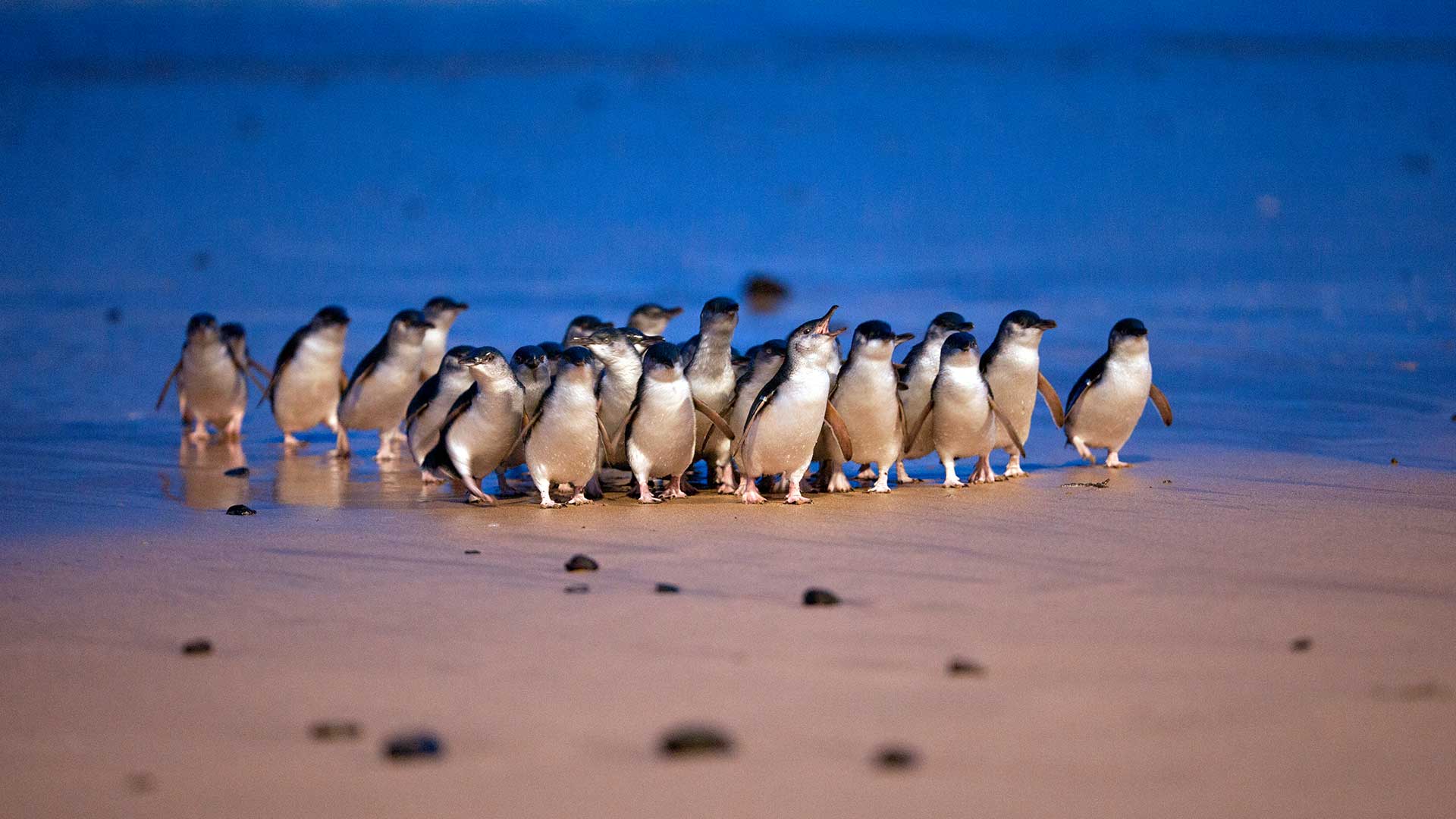
Professional Photo courtesy of the Phillip Island Nature Parks organization and shared with the public
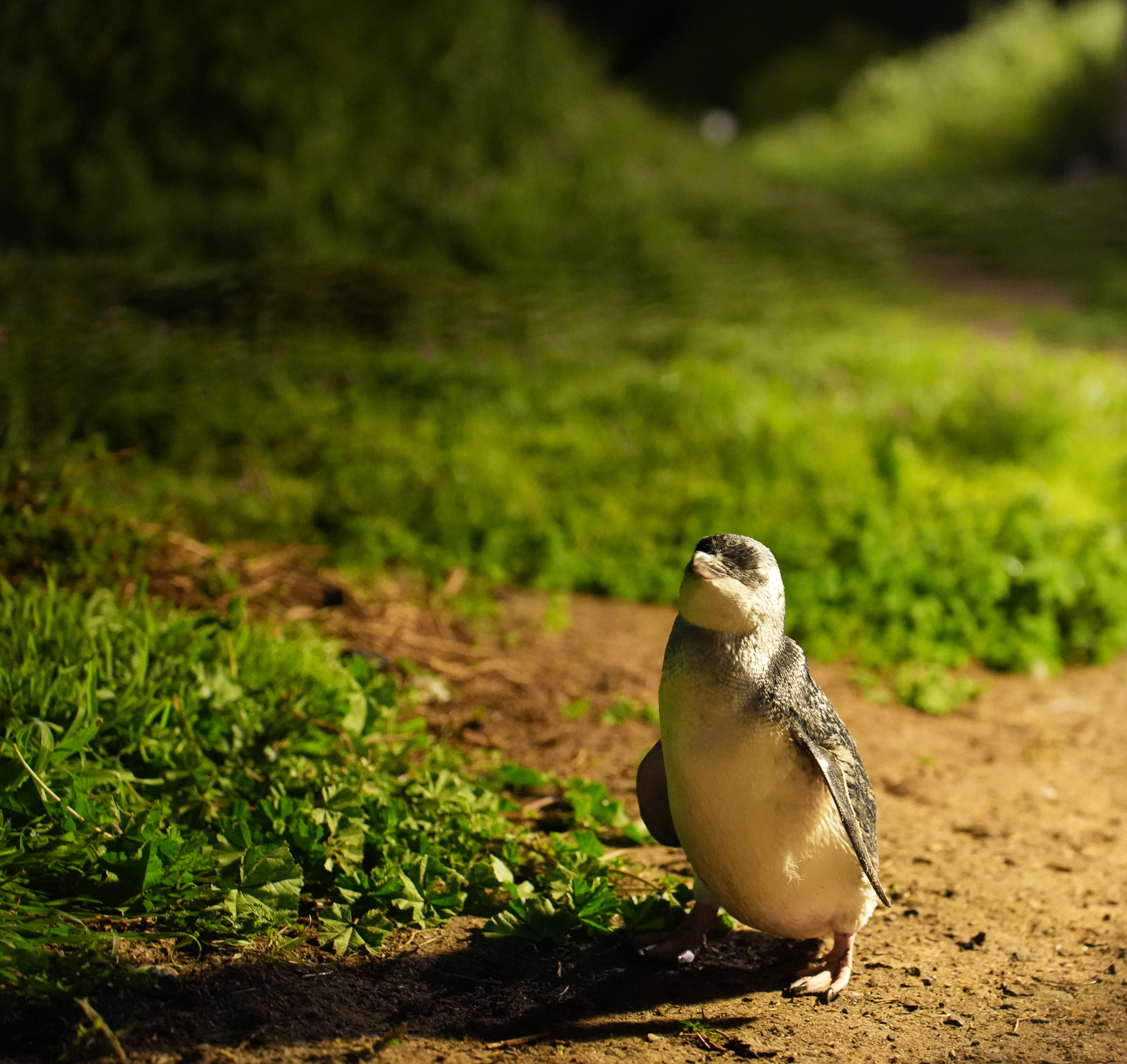
Professional Photo courtesy of the Phillip Island Nature Parks organization and shared with the public
In retrospect, I think we should have spent a couple days here and also visited the nearby Seal Rocks which is home to one of Australia’s largest fur seal colonies. However, the colony is on a rocky outcrop located 2km from shore so viewing is either via a boat tour or from Nobbies Visitor Center with binoculars.
If you brought your surfboard, Phillip Island is also a great surf destination with Cape Woolamai and Smiths Beach both being well-regarded surf breaks.
Wilson's Promontory
From Phillip Island we drove southeast 2 hours to Wilson's Promontory.
We stayed in an Airbnb in Yanakie just outside of Wilson's Pomontory National Park hosted by Tom and Tara which was perfect for exploring the park. The little granny flat is clean and pleasant and faces a nicely trimmed lawn where flocks of rose-breasted cockatoos would gather in the morning. Tom recommended a few walks, including the Wildlife Walk, which turned out to be one of the most memorable parts of the trip.
As we drove into the national park, the foliage opened up on the left and there was a narrow parking lot with a wooden sign for the Wildlife Walk.
The gravel trail moved through an old airstrip that had left a wide open plain now covered with tall grasses and scattered banksias, tea trees, and coastal shrubs, all well adapted to sandy, wind-exposed soil.
Within minutes, wildlife appeared everywhere.
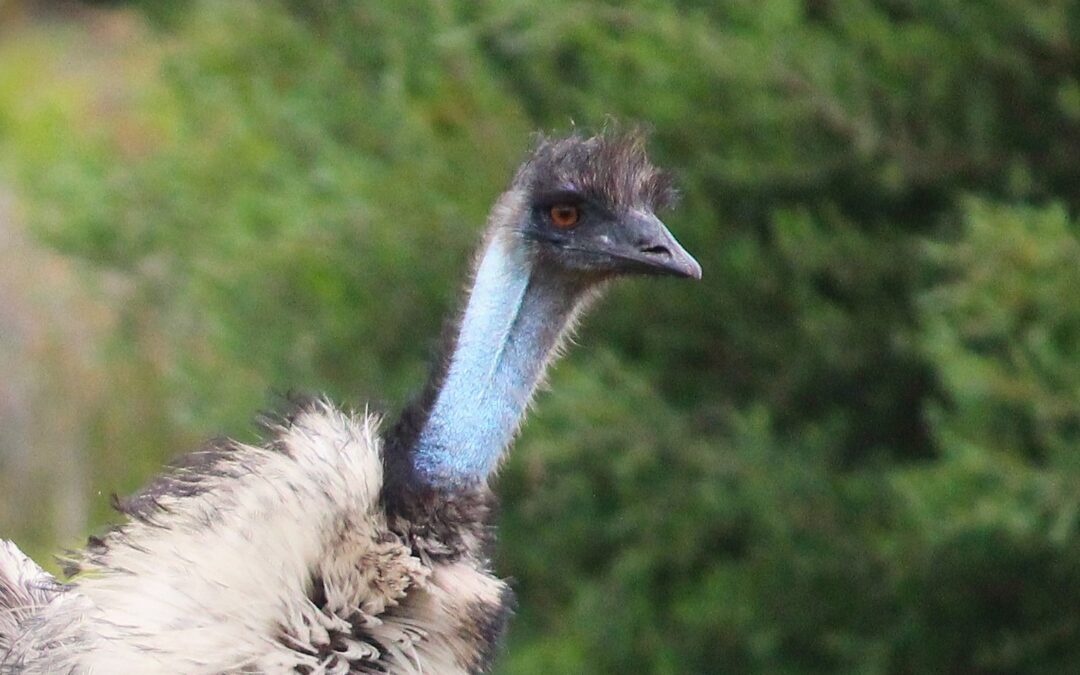
Emus moved through the grass like slow, deliberate shadows. Then more appeared—until a loose group was crossing the open fields ahead of us. Their shaggy grey-brown feathers shifted with each step, and the bare blue skin of their necks and heads caught the afternoon light like stone polished by water. They were quite large at close range, nearly two metres tall, yet surprisingly graceful.
In terms of size, emus are actually the second tallest birds in the world, with ostriches being the tallest. Emus legs are long and thick, well suited for running through the tall grass. At 30-31 mph (50 km/hr) emus are similar in speed to cassowaries but ostriches outpace them both clocking in at 45 mph (70 km/hr).
Interestingly, emus have three toes similar to cassowaries whereas ostriches only have two.
Another interesting fact I came across regarding emus is that the females are aggressive during mating season and actually compete with each other and fight for males. After mating, the males incubate the eggs and raise the young. Females typically move on and may have several male partners in a given season.
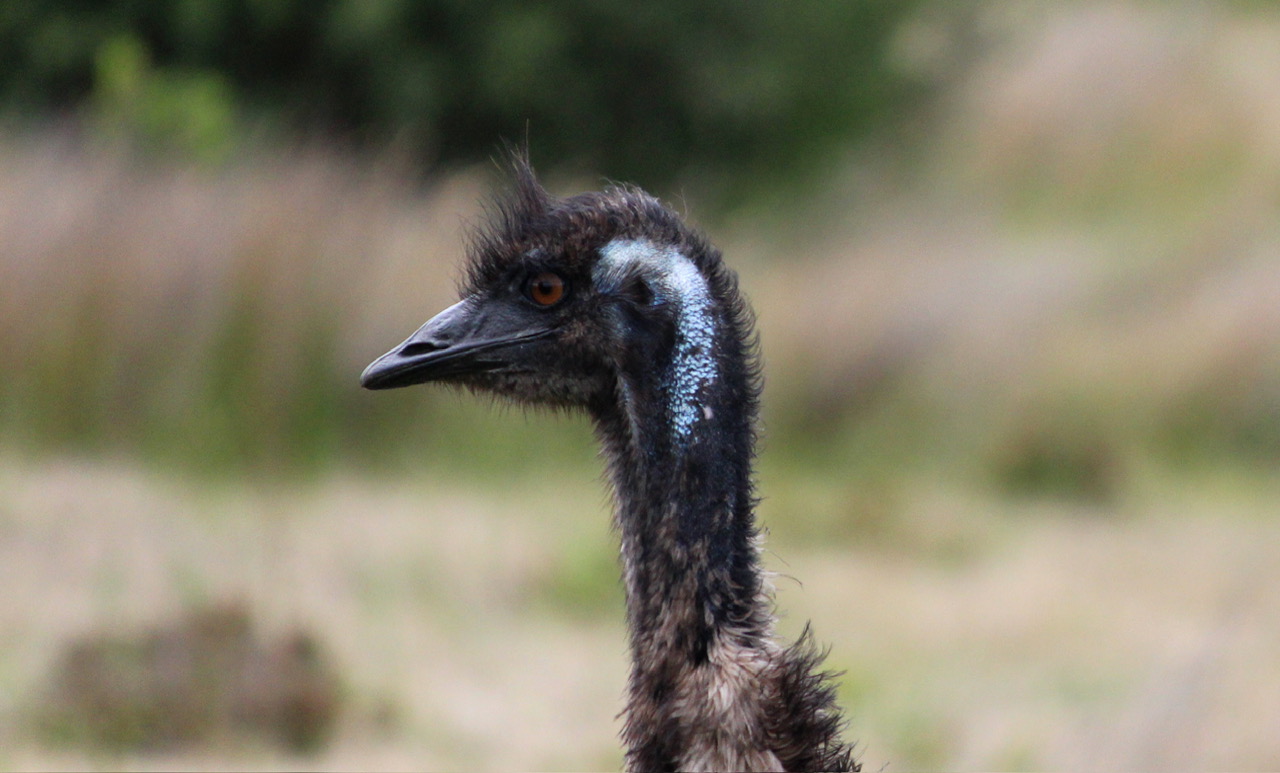
Emu on Wildlife Walk at Wilson's Promontory
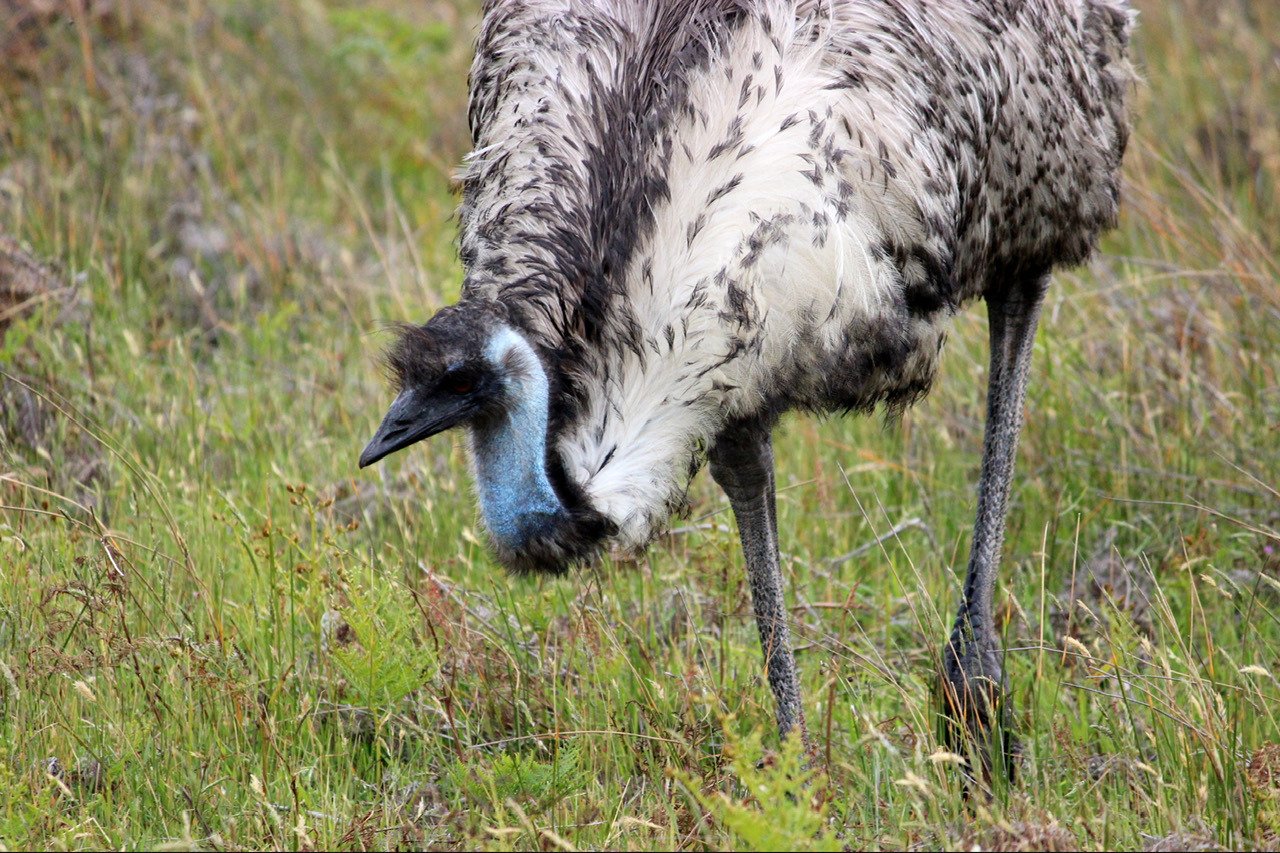
Emu
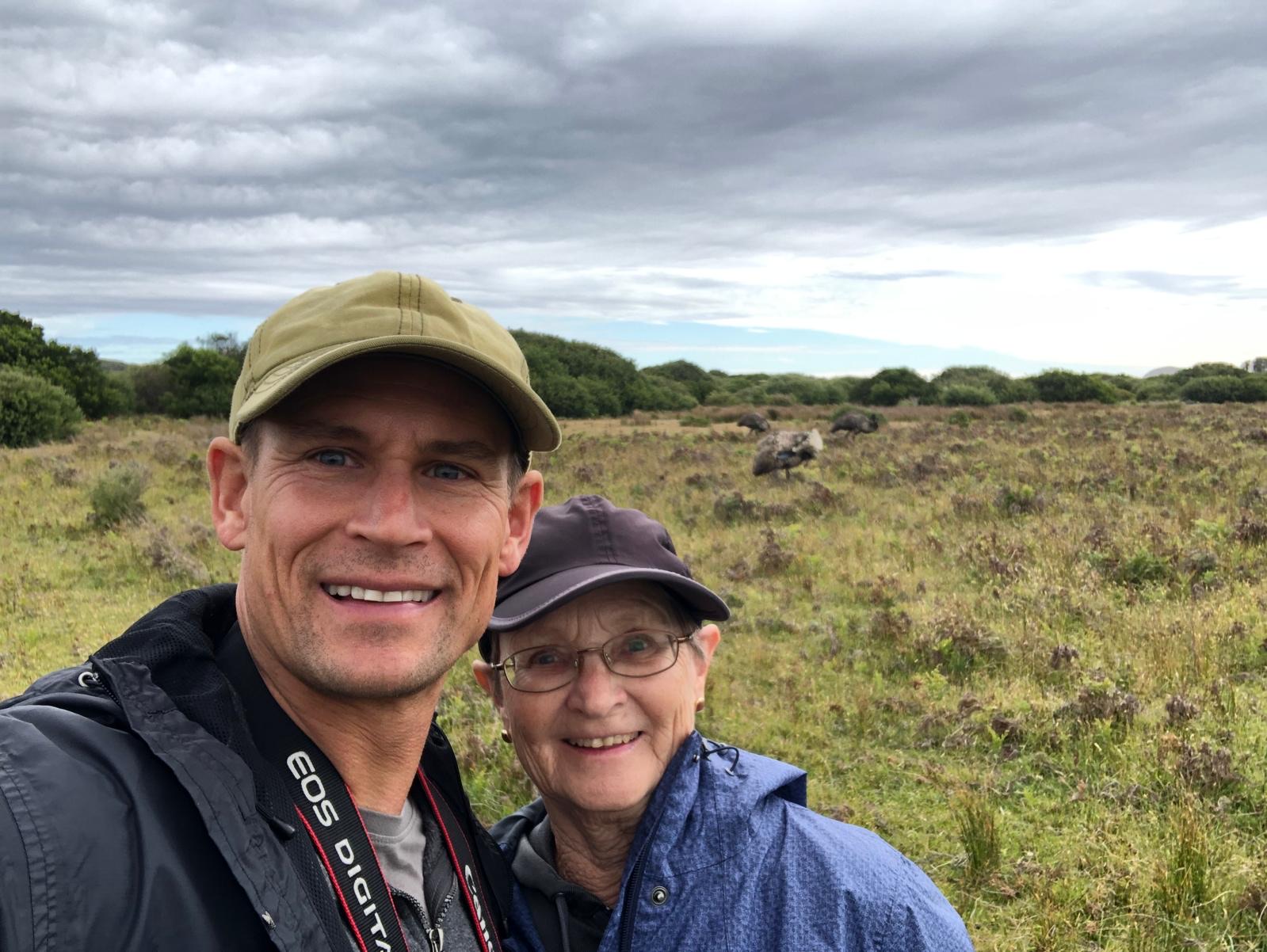
There are three emus in the background but they blend in so well they just look like shrubs.
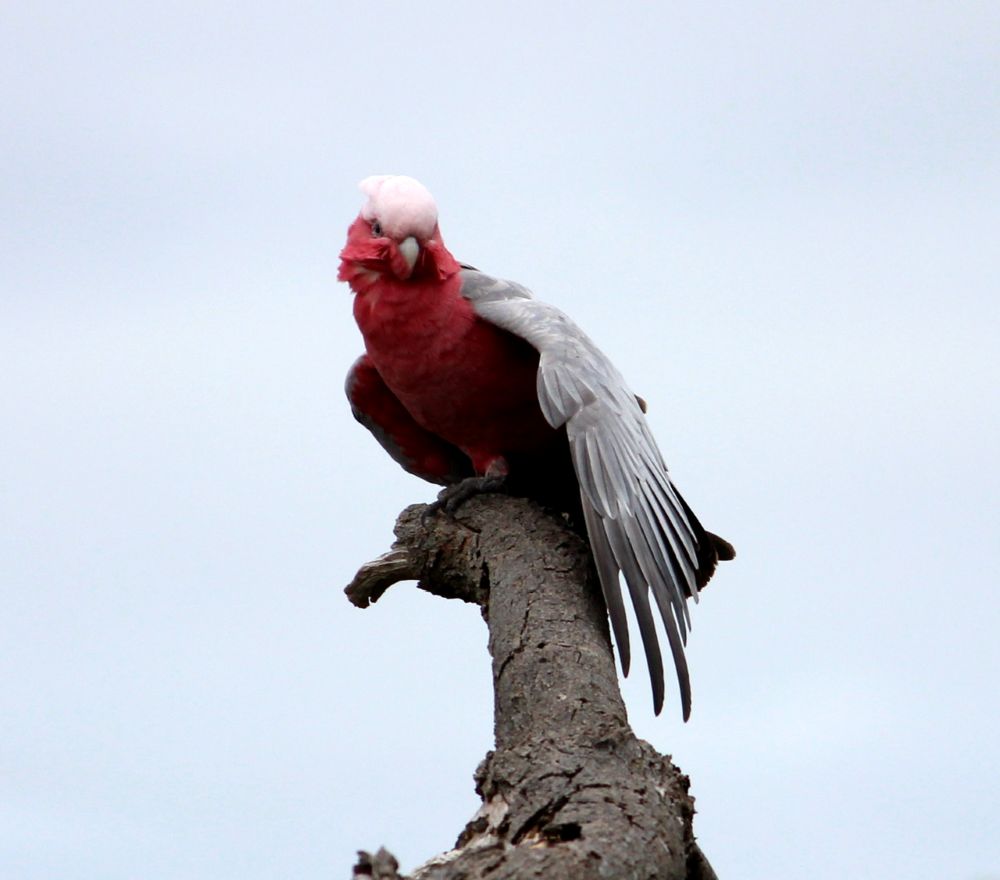
Galah (Rose-breasted Cockatoo)
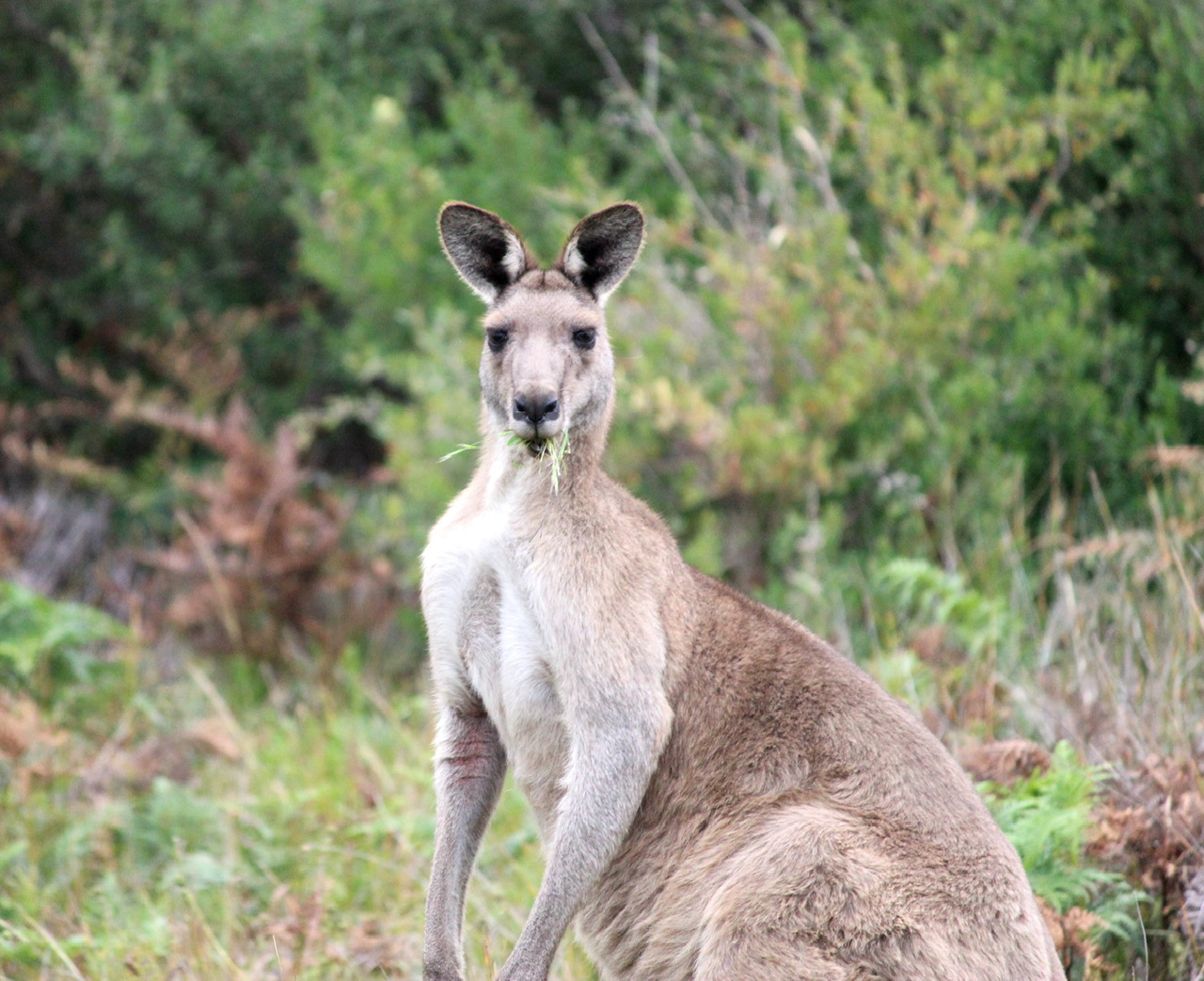
Kangaroo on Wildlife Walk at Wilson's Promontory
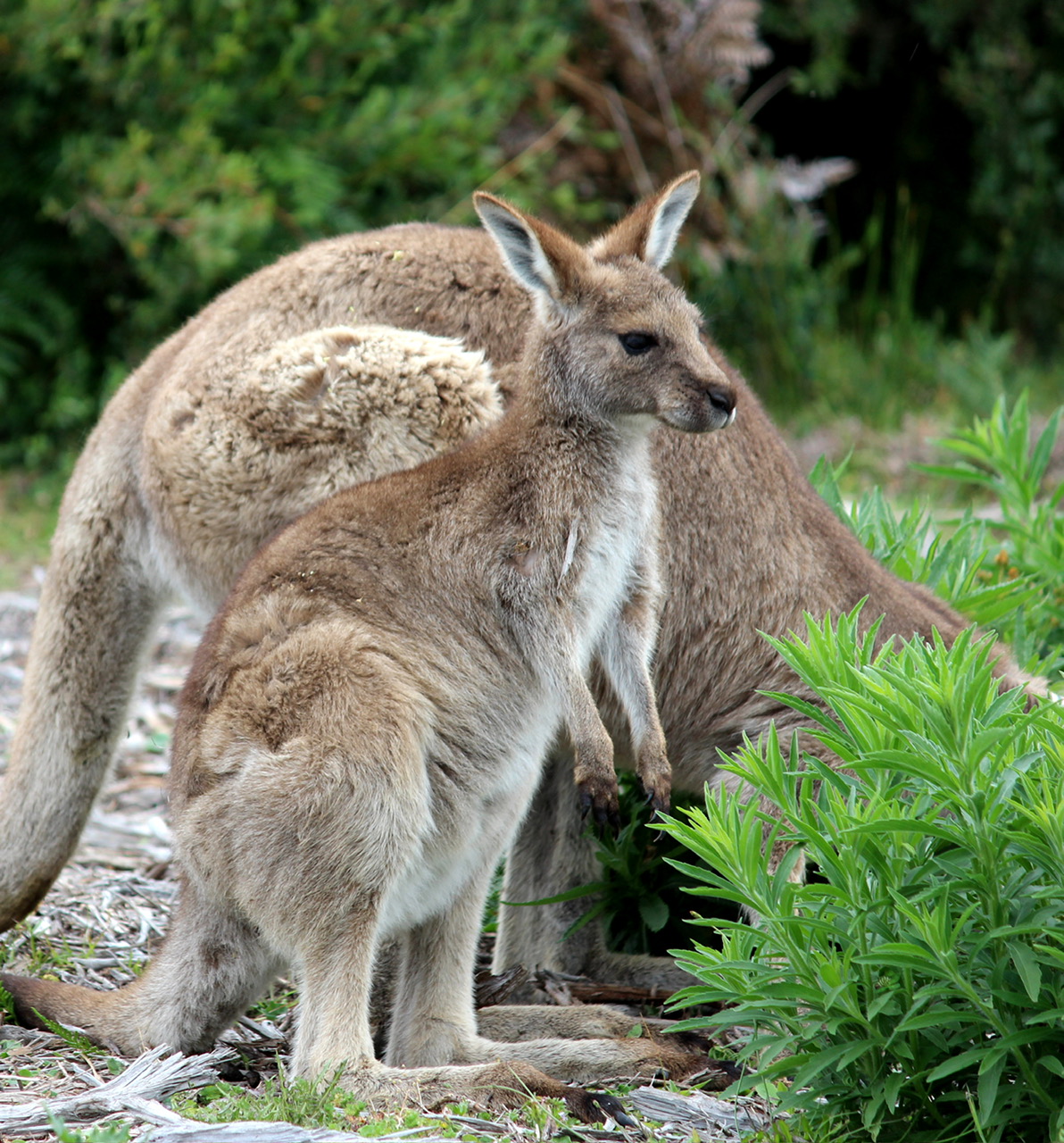
Joey
As we walked on, mobs of kangaroos grazed in the open. Some stood upright watching us before returning to feed, while others lay in the grass and barely acknowledged our presence. Several females had joeys nearby always within a few metres of their mother, grazing peacefully but never straying far. Unlike emus, kangaroo males are the primary fighters and may mate with several females. Being marsupials, females nurse the young in their pouches and even after leaving the pouch, joeys stay very close to their mothers for 6-12 months.
Overhead, a pair of galahs (rose-breasted cockatoos) swept across the grassland—soft pink chests and grey wings flashing against the muted tones of the landscape. One landed in a decaying old tree near the path and somehow looked both fierce and delicate at once as it looked at us inquisitively.
While we didn't see any wombats, there burrows were everywhere in the fields. I feel certain that if we visited at dusk or dawn we would have seen some out and about.
Big Drift
One of the most unusual landscapes in Wilson's Promontory is the Big Drift Track. It's a short 5.3 km hike very near the entrance to the park with a winding trail that meanders past some cattle pastures and then climbs a steep sandy hill that has you emerge out of the treetops and up onto shifting sandy dunes that extend to the sea. It is easy to lose direction here; footprints vanish within minutes. Without a mental map of your route, the dunes can quickly become disorienting.
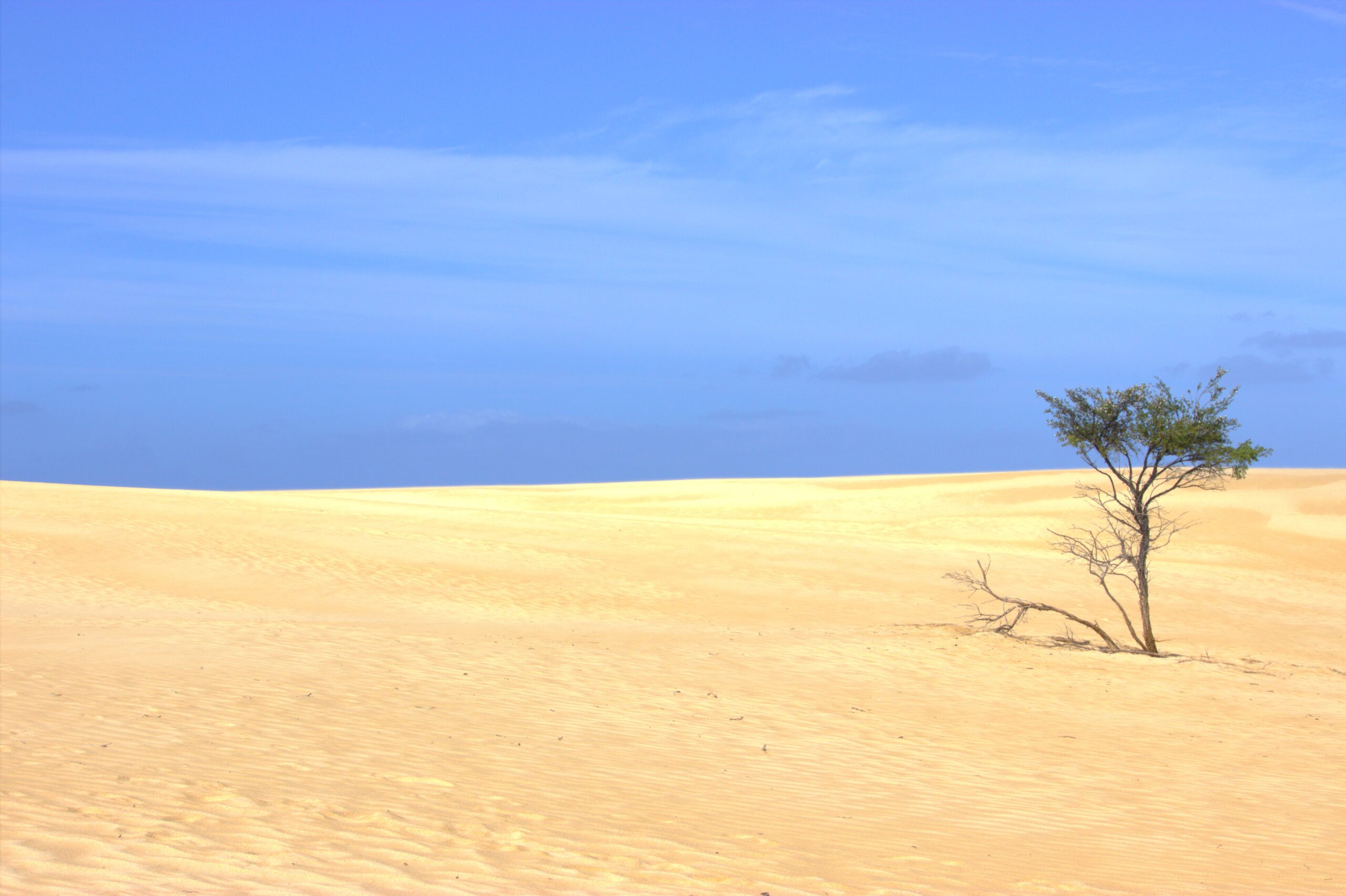
The Big Drift
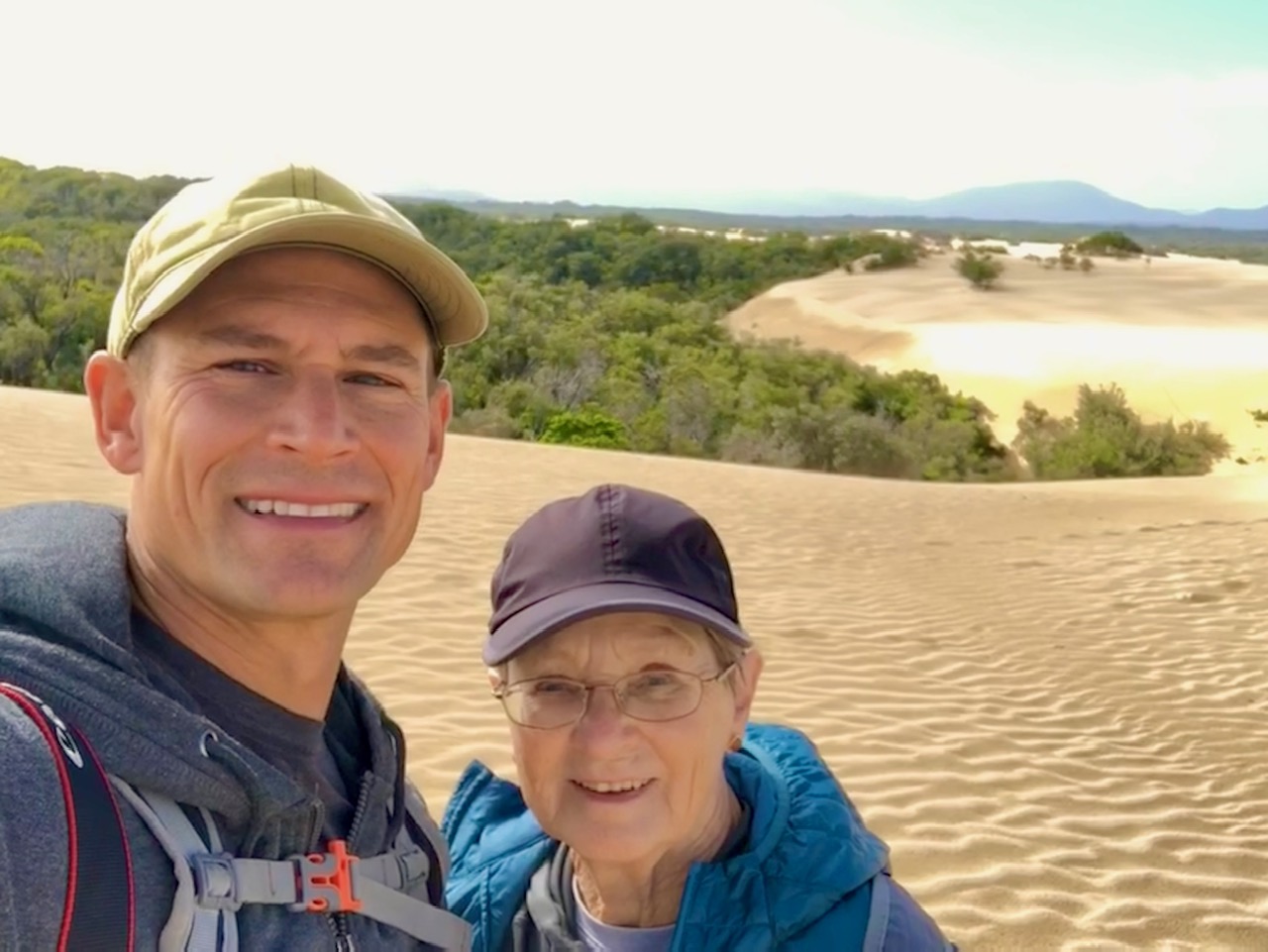
The Big Drift
Sparkes Lookout
Another hike we greatly enjoyed was the 4.8km trek up to Sparkes Lookout. The trail passed through shaded eucalyptus forest where light filtered in soft patterns across the ground. Massive granite boulders appeared between clusters of vegetation, as if dropped randomly into the landscape. The climb was steady but never harsh, the forest gradually opening as we gained elevation.
As we stepped out onto the rocky lookout, the world suddenly expanded.
Below us stretched a coastline of extraordinary contrast—white sand beaches curving around turquoise water, forested hills rolling inland, and distant granite peaks rising like islands from the landscape. The scale and variety within a single view gives you a sense of adventure and a desire to explore.
Narrow path up to the lookout
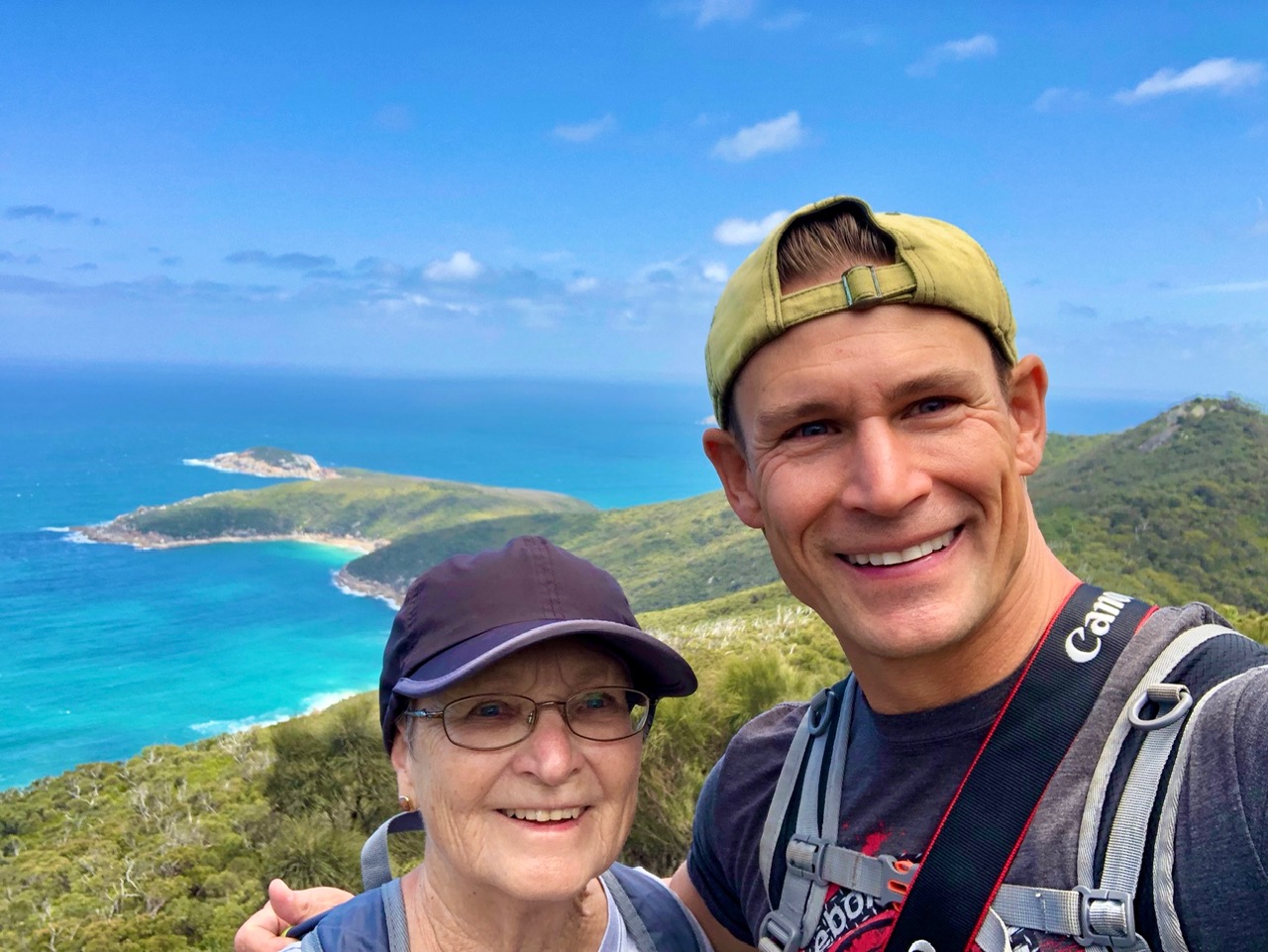
View from the lookout with Tongue Point in the background
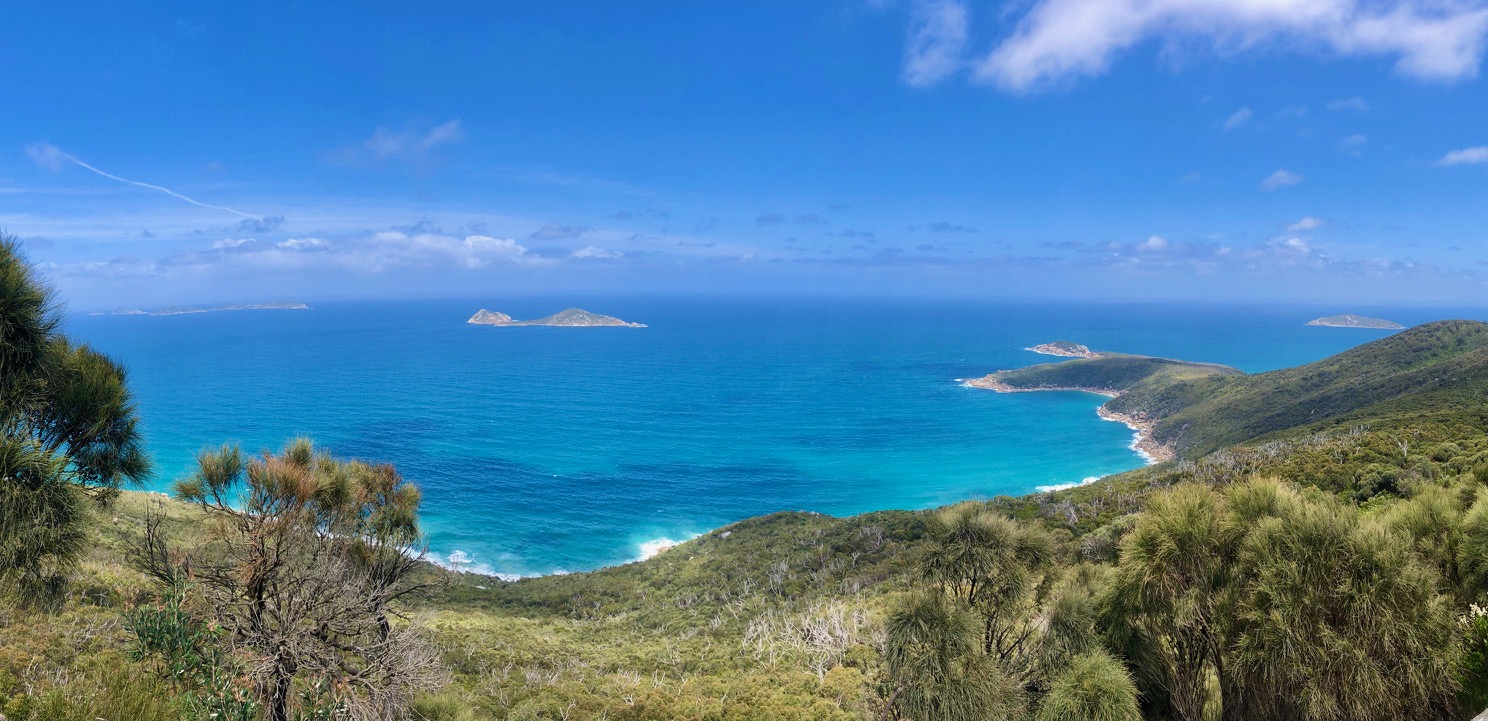
Incredible sweeping view of the coastline, Bass Strait, and Norman Island
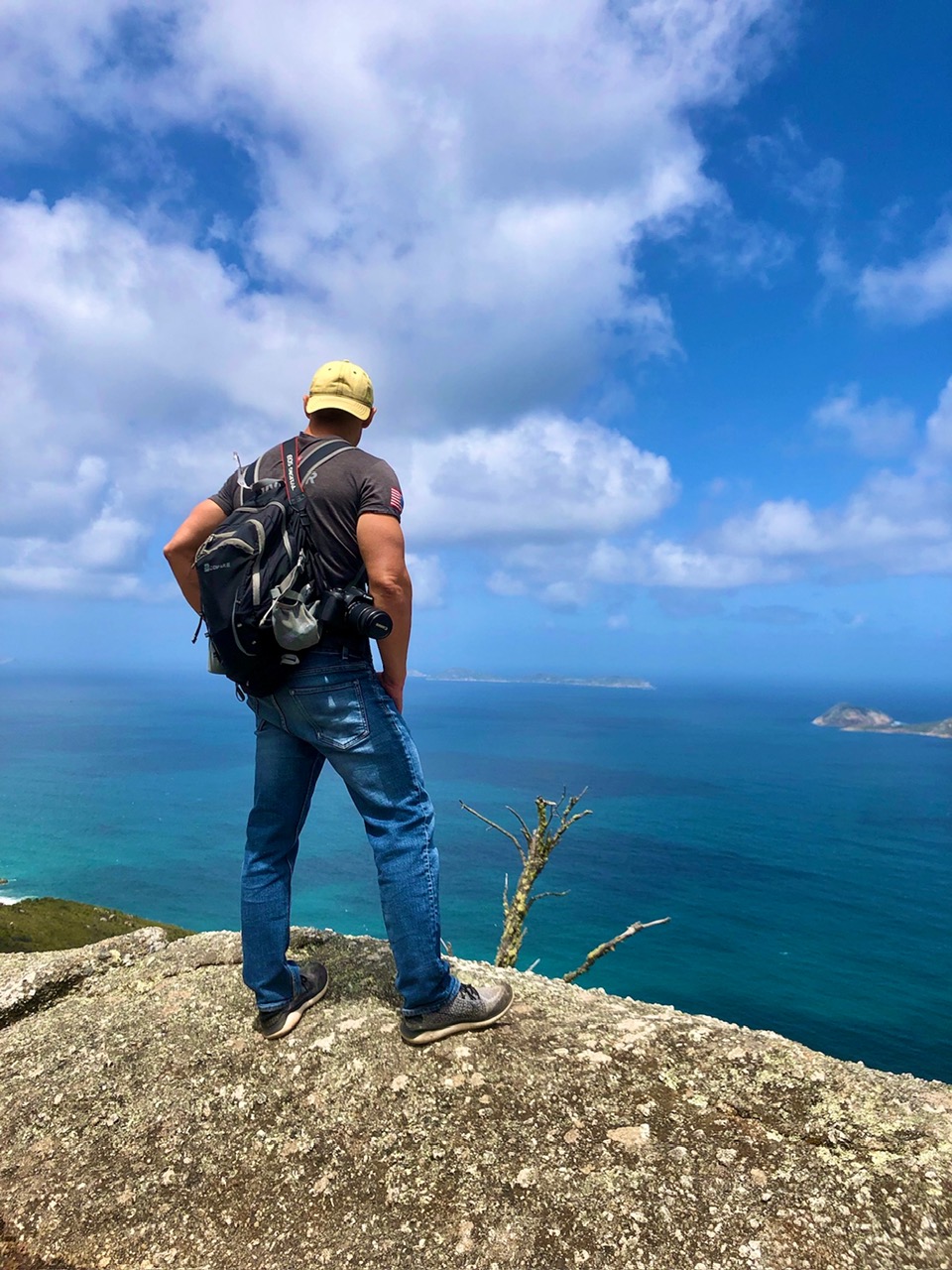
View from the lookout
Final Thoughts
Phillip Island and Wilson’s Promontory offered two very different but complementary experiences: one defined by coastal wildlife at dusk, the other by vast landscapes and encounters with native animals in the wild.
The Penguin Parade remains one of Australia’s most unique wildlife experiences, while Wilson’s Promontory stands out as one of the most diverse national parks in the country. From emus crossing open grasslands to crimson rosellas flashing through eucalyptus canopy, from kangaroo mobs to wind-carved sand dunes, the contrast of environments and wildlife made this part of Victoria unforgettable.
Wonderful! Wonderful! Wonderful!!!!!