Tasmania - Baby Devils?!
After driving the Great Ocean Road, my mum and I drove back to Melbourne and flew 1 hour and 20 minutes across the Bass Strait to the capital city Hobart in the state of Tasmania. When most people think of Tasmania, they picture the main island which is quite large being the 26th largest island in the world. However, Tasmania also includes 1,000 other little islands, mostly unpopulated, and scattered across the Bass Strait, Tasman Sea, and Southern Ocean. Our trip was constrained to the main island which offers plenty of beaches, mountains, and fascinating sights to explore.
Bicheno
From Hobart, we drove 2 and a half hours northwest to Bicheno, picked up a few groceries, and checked into our Airnbn called the Shells on Bicheno which was a great little place to stay. In the evening we cooked dinner and played some chess.
In the morning, we explored the nearby coastline in Bicheno, which was rocky but quite beautiful with bright orange-red lichens covering massive granite boulders and crystal clear waters.
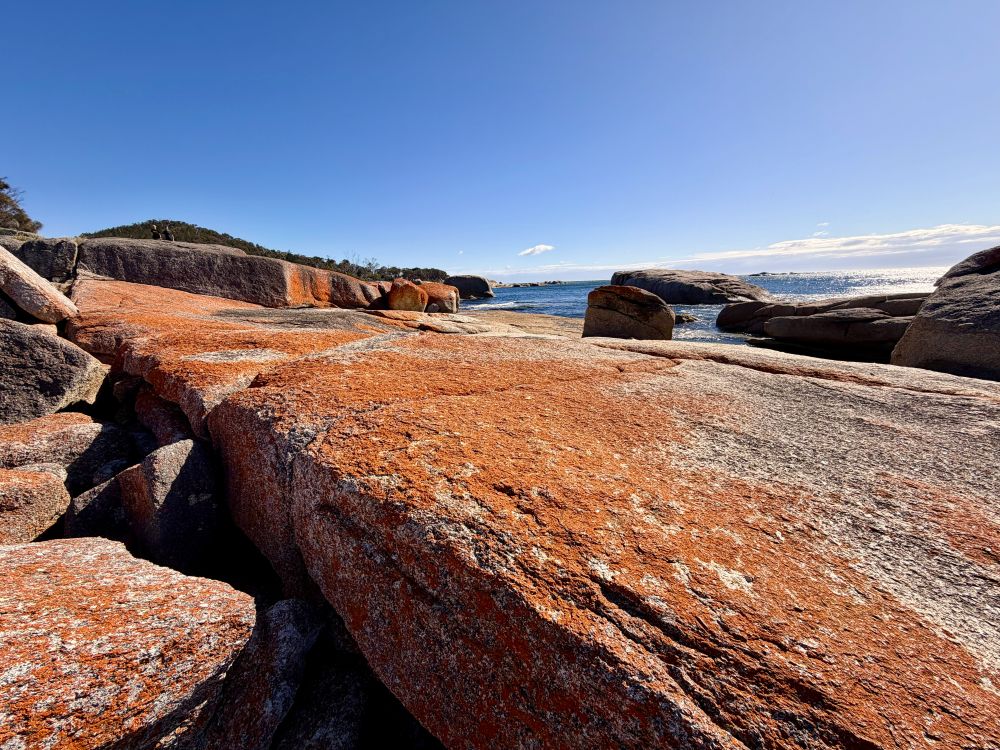
The stone itself is granite; the bright orange color comes from a living crust of Xanthoria which is a bright orange lichen.
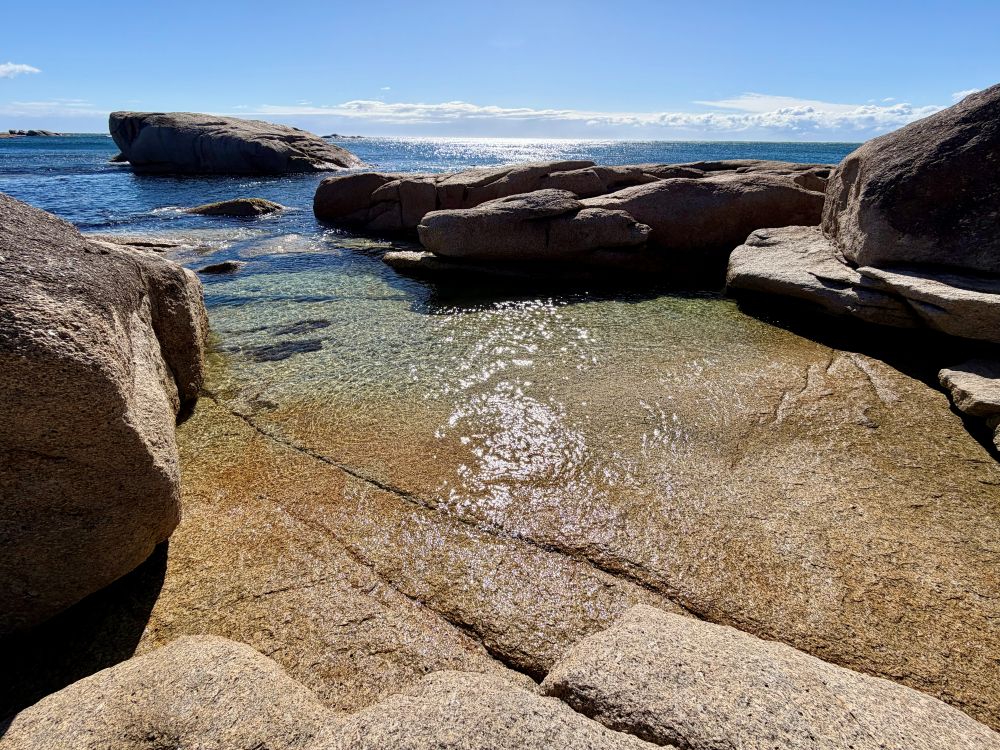
Crystal clear ocean waters
The Bicheno Blowhole
East Coast Natureworld
After exploring a bit of the coast in Bicheno, we stopped in a small wildlife sanctuary titled the East Coast Natureworld. The park grounds allow guests to wander about and experience Tasmania's unique wildlife. The kangaroos are quite friendly and regularly approach guests but the white wallaby's are more reclusive. Tasmanian Devils, quolls, echidnas, wombats, snakes, and lizards are all kept in separate enclosures. I don't know how busy it usually is but there were very few people there when we arrived.
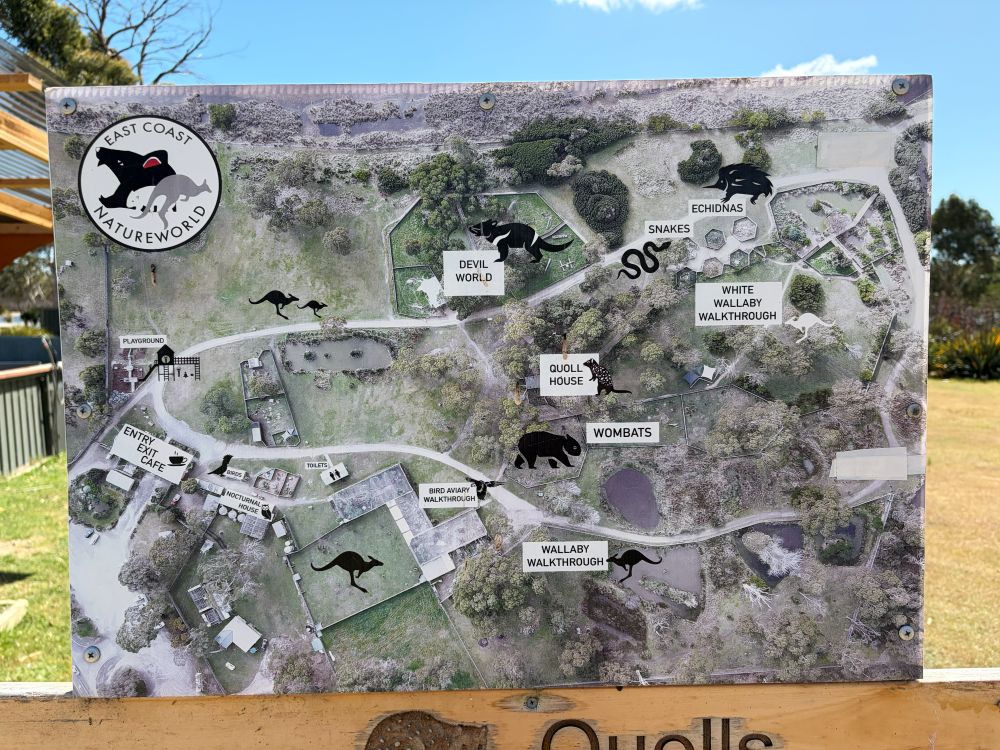
Natureworld Park Map
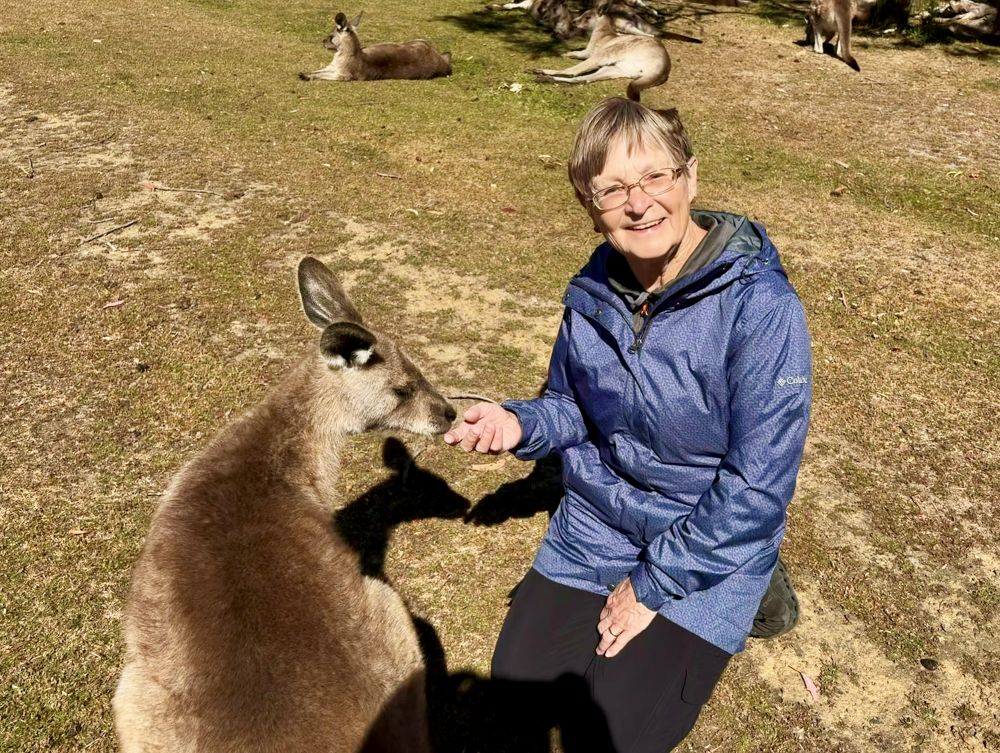
Mum with kangaroos in Natureworld
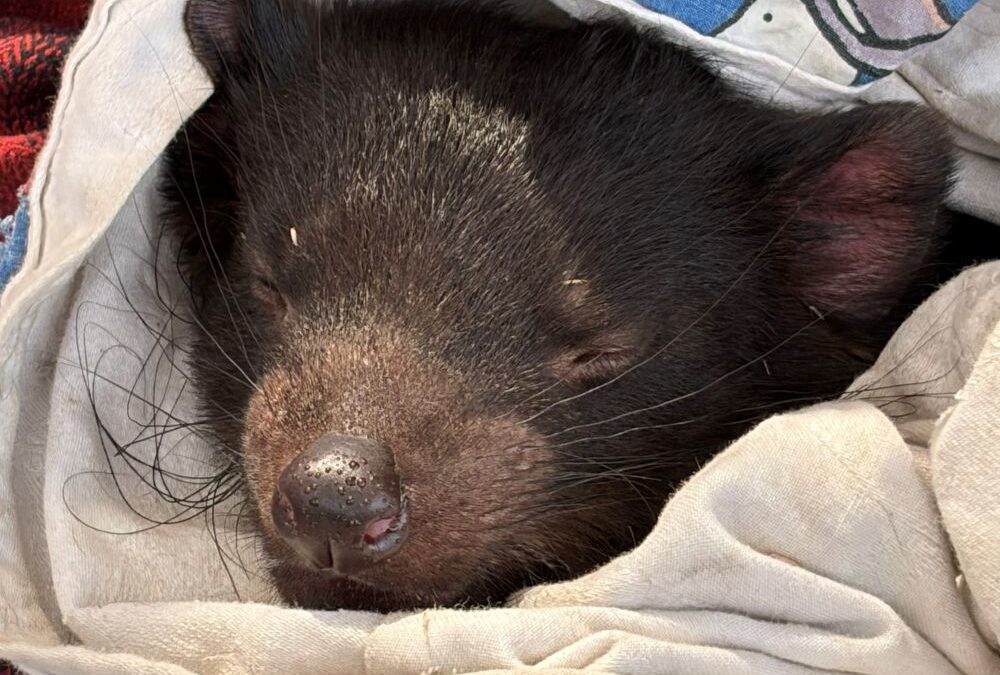
While the park itself is interesting, what makes the sanctuary especially memorable are the close-up wildlife encounters. We paid $95 AUD each for an encounter with baby Tasmanian Devils, and it was absolutely incredible.
It was just my mum, me, and the naturalist who had been raising the babies since they were born. He explained how Tasmanian Devils are raised and cared for, and then we had the extraordinary experience of holding the little devils in our arms while he talked to us about them.
Of course, we could only hold the babies. Adult Tasmanian Devils are considerably less cuddly! They are the world's largest surviving carnivorous marsupial, and their powerful jaws allow them to crush and consume bones.
Despite their fearsome reputation, Tasmanian Devils generally avoid people and aren't a danger to humans unless threatened or cornered.
For me, this was one of those experiences that made the trip worthwhile all by itself. Seeing a Tasmanian Devil in a wildlife park is interesting; actually holding one while learning about it from someone who has raised it from birth was something I'll remember for a long time.
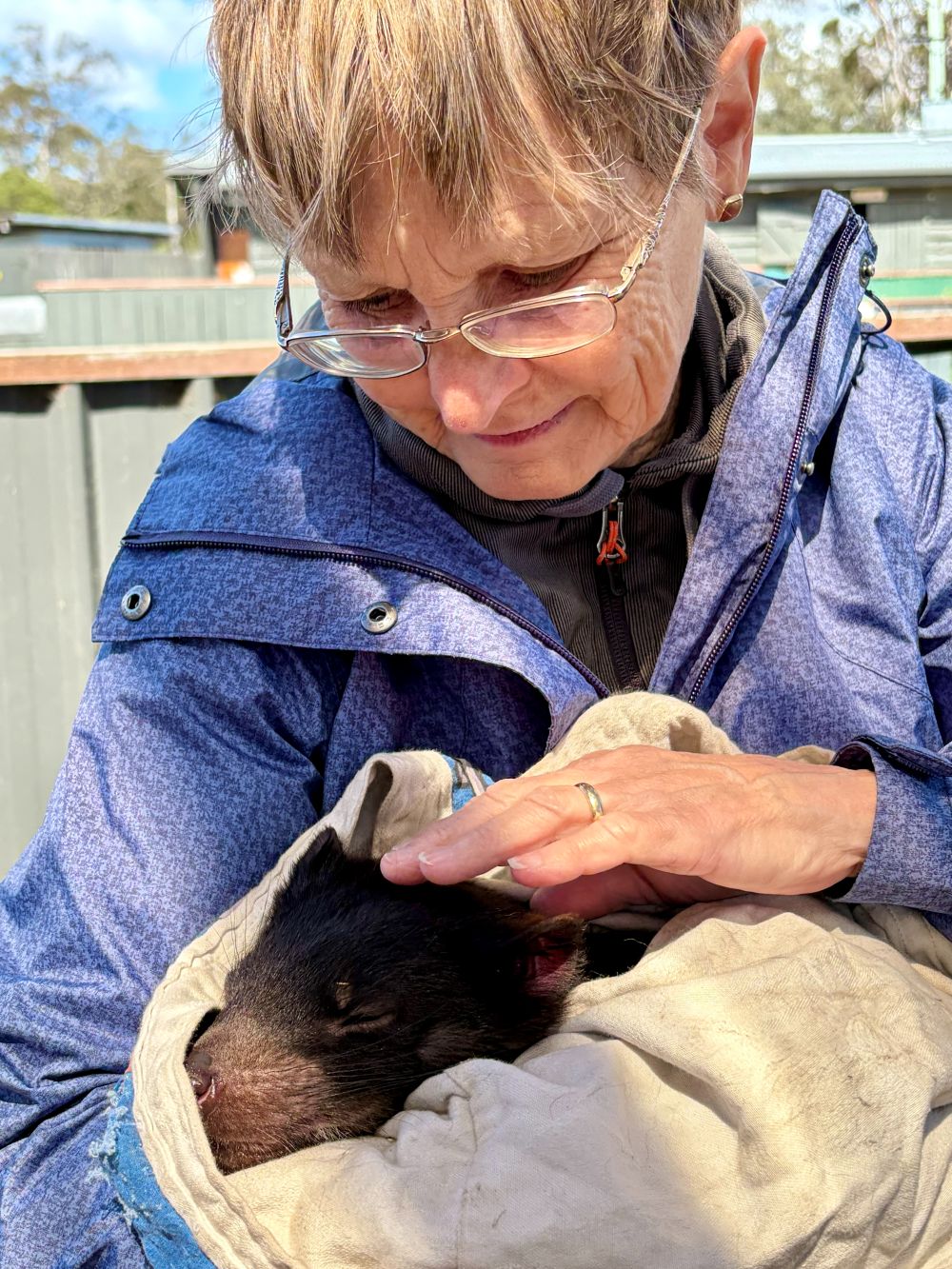
Mum with baby Tasmanian Devil
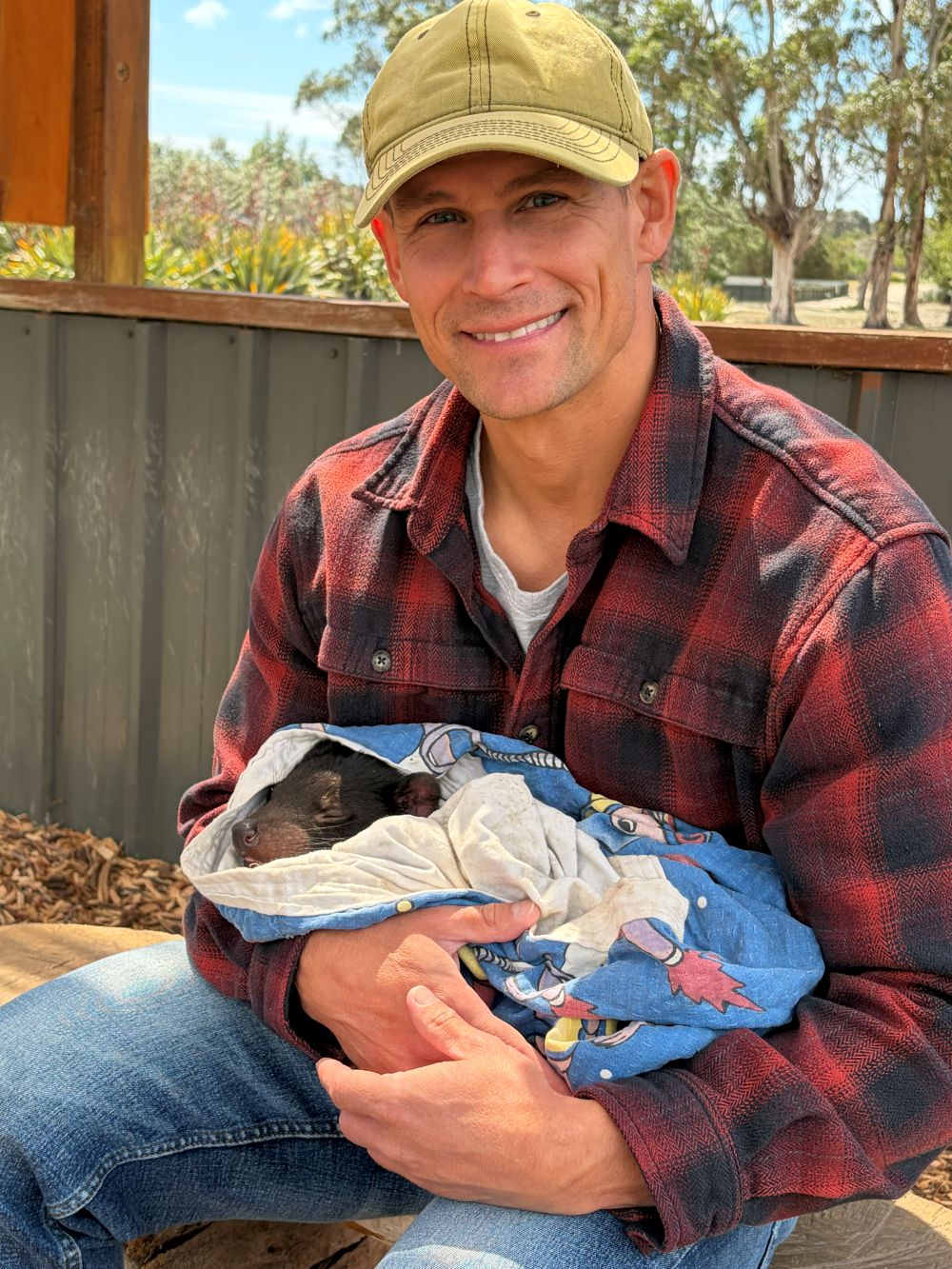
Eric with baby Tasmanian Devil
Sealife Restaurant & Café
After our visit with the devils, we had lunch at the Sealife Restarurant & Cafe which has incredible views of the ocean and Waubs Beach. I would definitely recommend it as a pleasant stop for lunch near Bicheno. The setting alone makes it worthwhile.
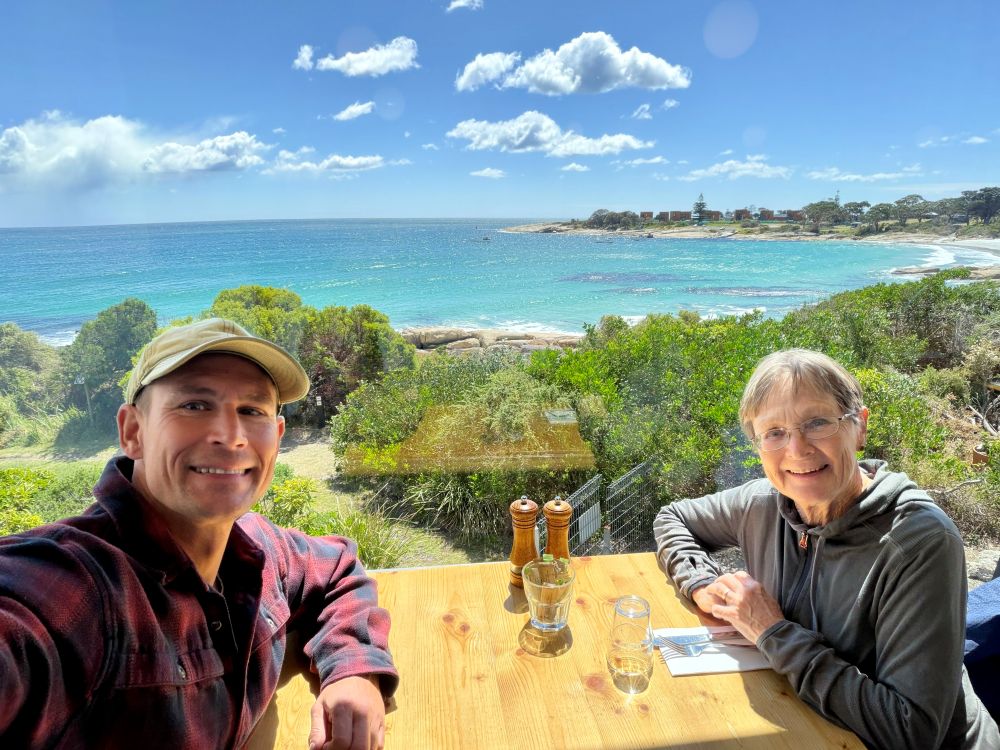
Incredible views from Sealife Cafe
Freycinet National Park
In the afternoon, we considered tackling one of the more famous walks around Freycinet National Park, including the hike to Wineglass Bay. I had actually visited Wineglass Bay and the Bay of Fires on a previous trip, and while both are beautiful, we decided not to spend the afternoon doing another major hike.
Instead, we headed to Friendly Beaches.
The name is appropriate. Friendly Beaches is a long stretch of sugar white sand backed by dunes, with remarkably clear turquoise water along Tasmania's east coast. One of the things I liked most about it was the lack of pressure to do anything in particular. The park's website describes it as a place where you can walk for five minutes or five hours, depending on your mood, and I think that's exactly right.
Sometimes a beautiful beach where you can simply wander around is better than spending several hours trying to conquer another famous hike.
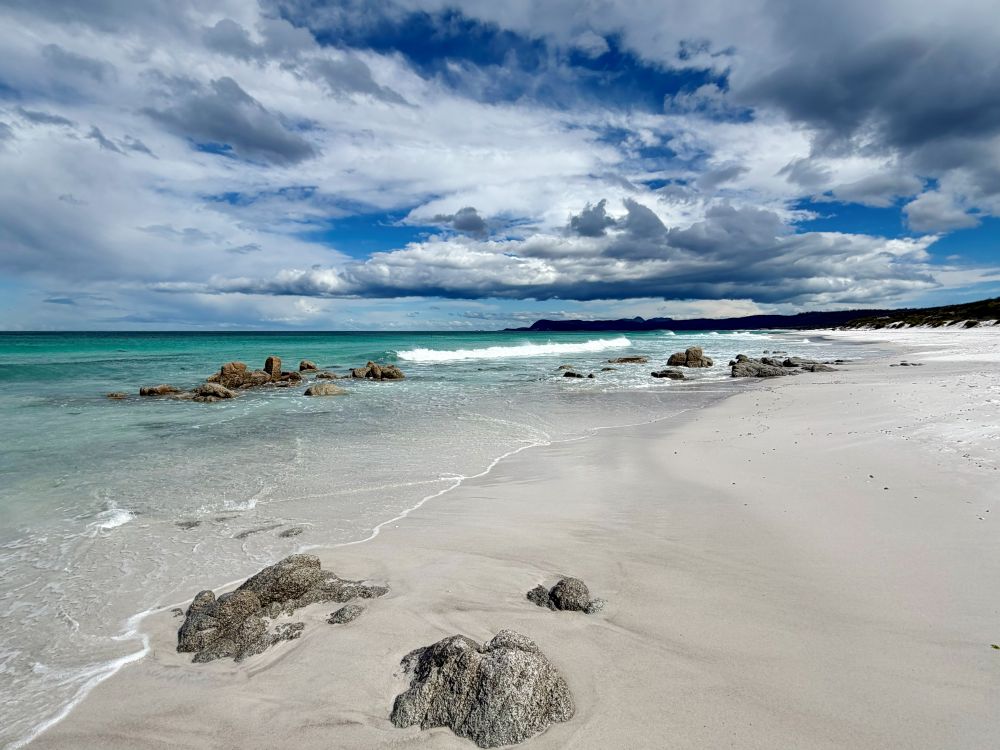
Ambling along the Friendly Beaches
Launceston
The next morning, we woke up early, made breakfast, and drove about two hours from Bicheno to Launceston. The drive through the Tasmanian countryside was pleasant, and we stopped at a roadside café for coffee and a lamington.
Lamingtons are a quintessential Australian treat: squares of sponge cake coated in chocolate icing and desiccated coconut. They are traditionally said to have been named after Lord Lamington, who served as Governor of Queensland in the late 1800s.
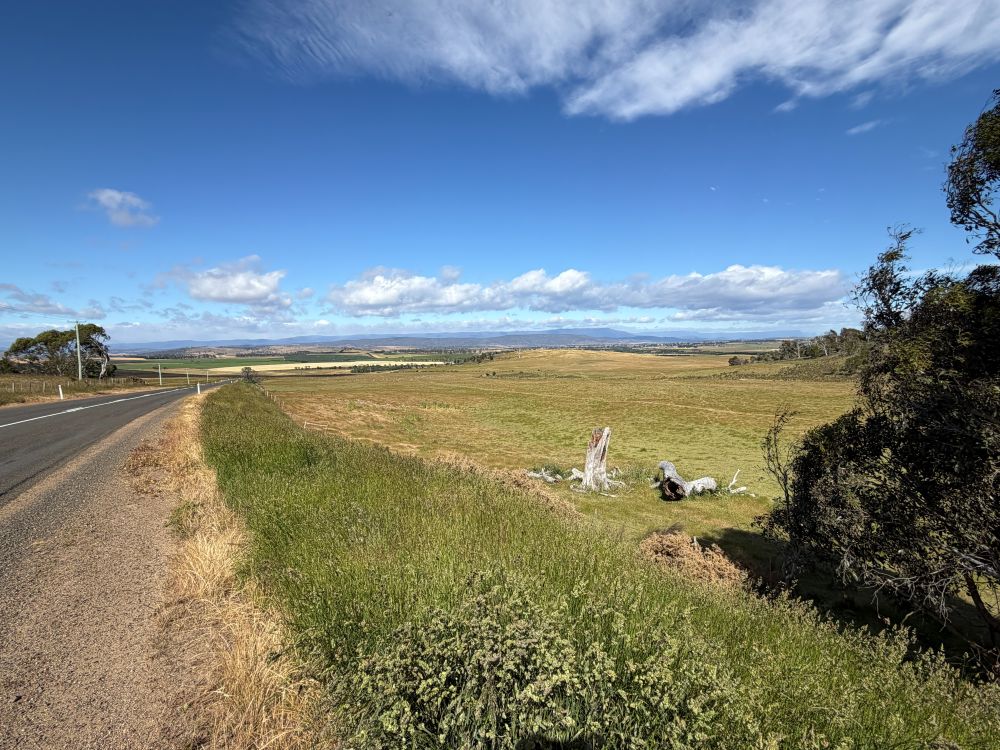
Tasmanian countryside
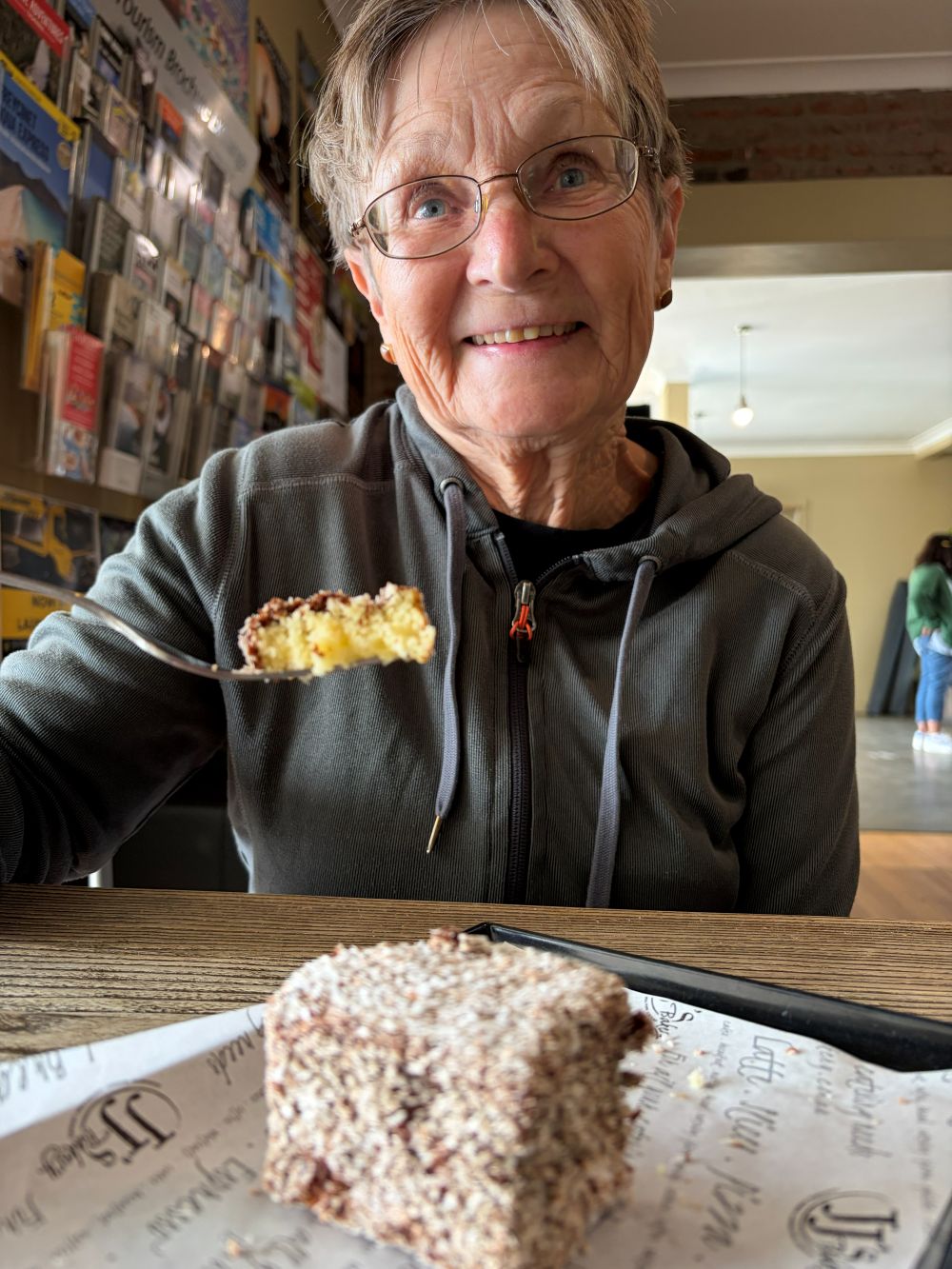
Mum tasting her first lamington!
We arrived in Launceston, checked into our Airbnb, and then went for a stroll around town. Launceston has a pleasant little downtown area with shops and restaurants, situated around the Tamar and North Esk rivers.
But the real highlight of Launceston for me was Cataract Gorge Reserve.
The gorge is remarkably close to the city centre, yet once you're on the trail it feels like you've left the city behind. The walk begins near the picturesque old caretaker's cottage, built in 1890 near King's Bridge, and winds along the cliffs above the gorge.
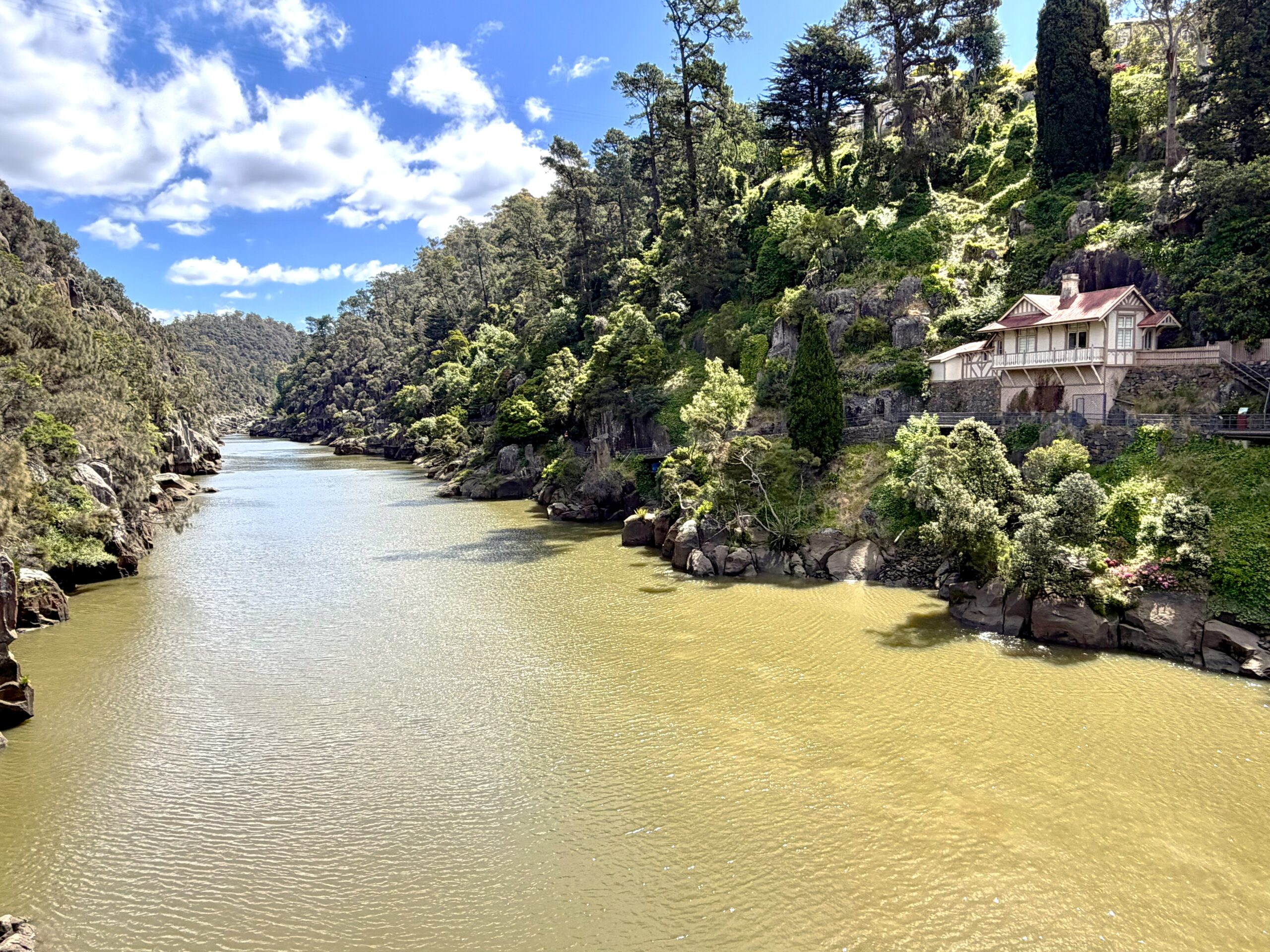
Old Caretaker's Cottage near Kings Bridge
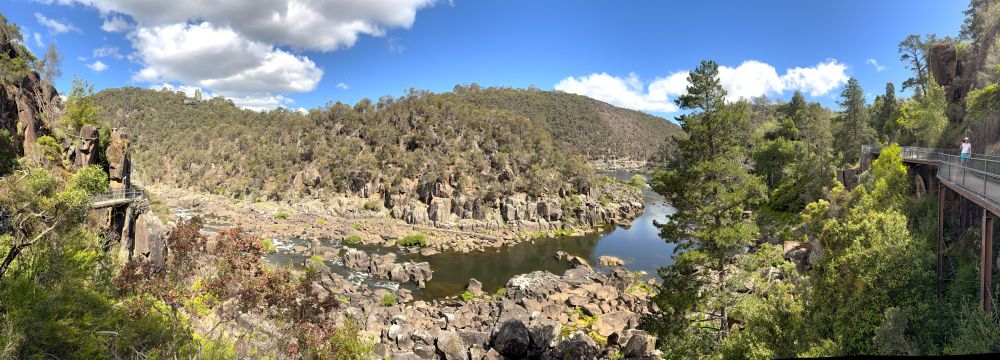
View of Cataract Gorge from the path
Eventually, you reach a chairlift that crosses the gorge to the other side, where there's a pleasant little beach where you can swim. From there, you can walk back along the opposite side of the gorge toward town.
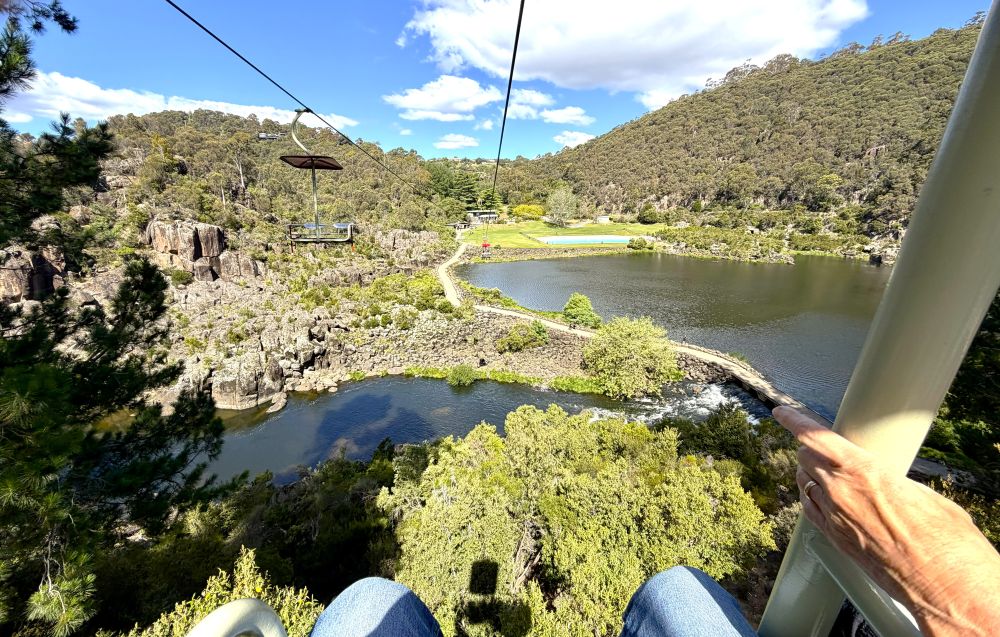
Chairlift over Cataract Gorge
For me, this was easily the best part of Launceston. The combination of the river, cliffs, forest, historic buildings, and walking trails makes it a surprisingly beautiful place to explore, and I would highly recommend the walk to anyone visiting the city.
Penny Royal & James Boag Brewery
After our hike, we stopped at Penny Royal Van Diemen's Land, an adventure park built around a dramatic waterfall and cliffside setting. It has restaurants, rides, zip lines, rock climbing, and cliff-jumping activities.
It's quite well done, although it is also very touristy. I think it would be a good option if you're travelling with children or simply looking for somewhere unusual to have a meal and spend a few hours. For us, it was more of a quick stop on the way back into town.
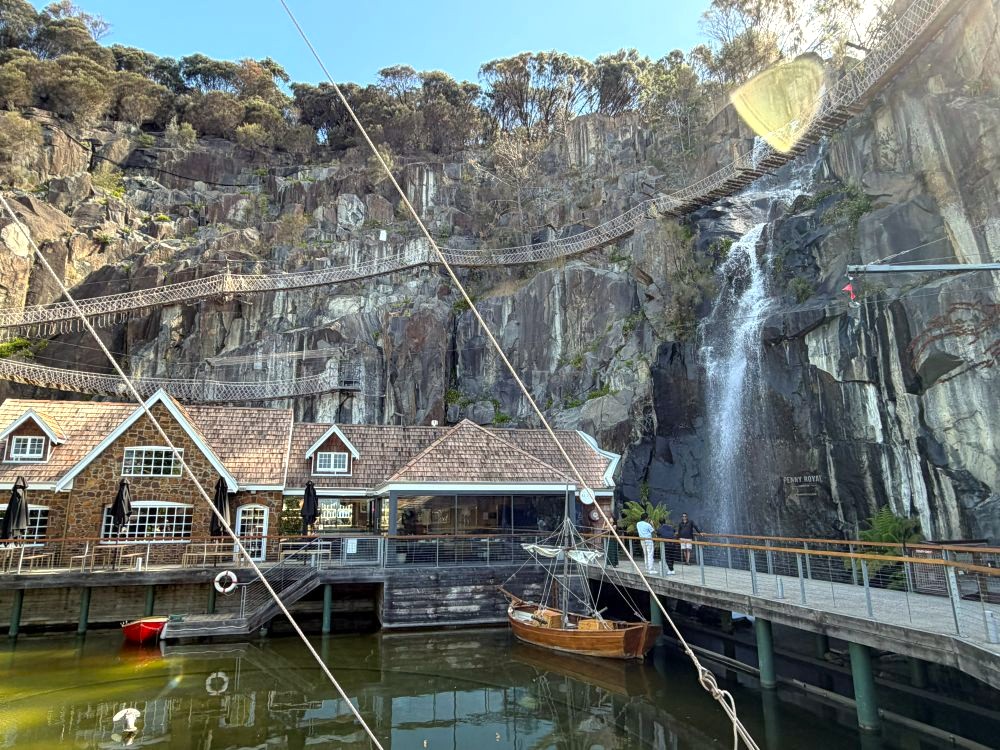
Penny Royal Van Diemen's Land Adventure Park
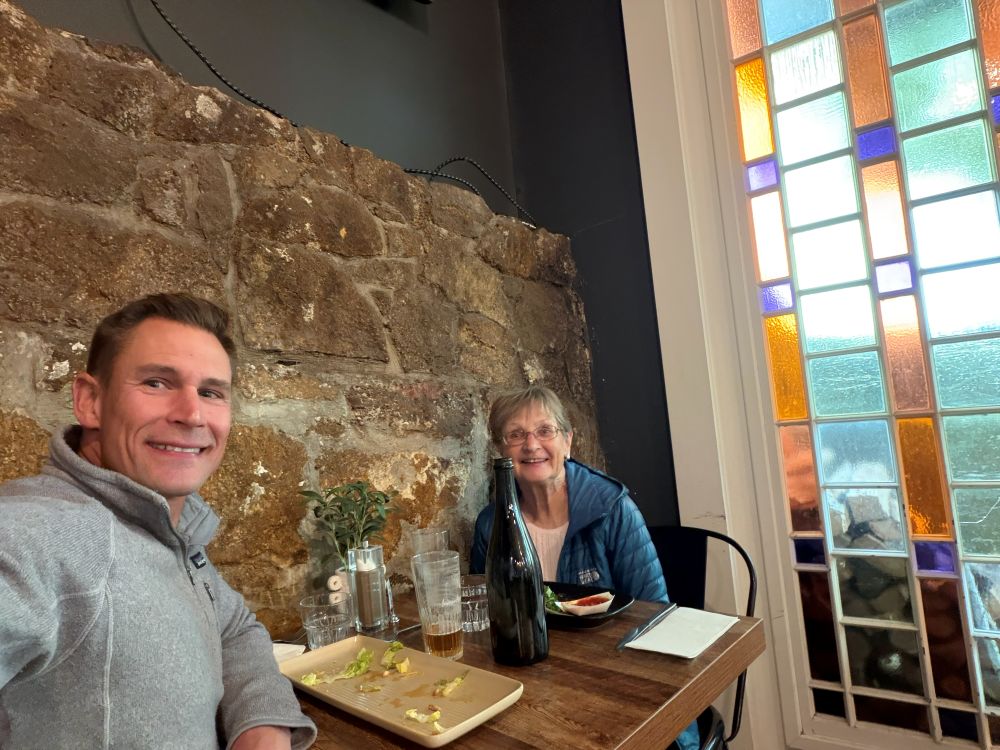
James Boag Brewery
Just next to Penny Royal is the James Boag Brewery, which was established more than 160 years ago by Scottish immigrant James Boag.
We stopped in for a beer and a simple dinner at the brewery before heading back to our Airbnb for the evening.
Summary
Overall, Launceston surprised me. I wouldn't put it ahead of Hobart as a destination, but the Cataract Gorge in particular makes it worth a stop and the combination of the gorge, the historic city centre, and the surrounding countryside gives Launceston considerably more character than I had expected.